The IIR Hosted Expert Discussions on Germany’s Foreign Policy and Hungary’s Economic Future

Germany’s changing foreign policy direction after Russia’s invasion of Ukraine and the future of Hungary’s post-Orbán economic model were among the key topics discussed at the IIR this May. Through two expert lectures featuring leading scholars from the University of Oxford and Corvinus University of Budapest, audiences explored some of the most pressing political, economic and security debates currently shaping Central Europe and the wider European landscape.
Germany after Ostpolitik
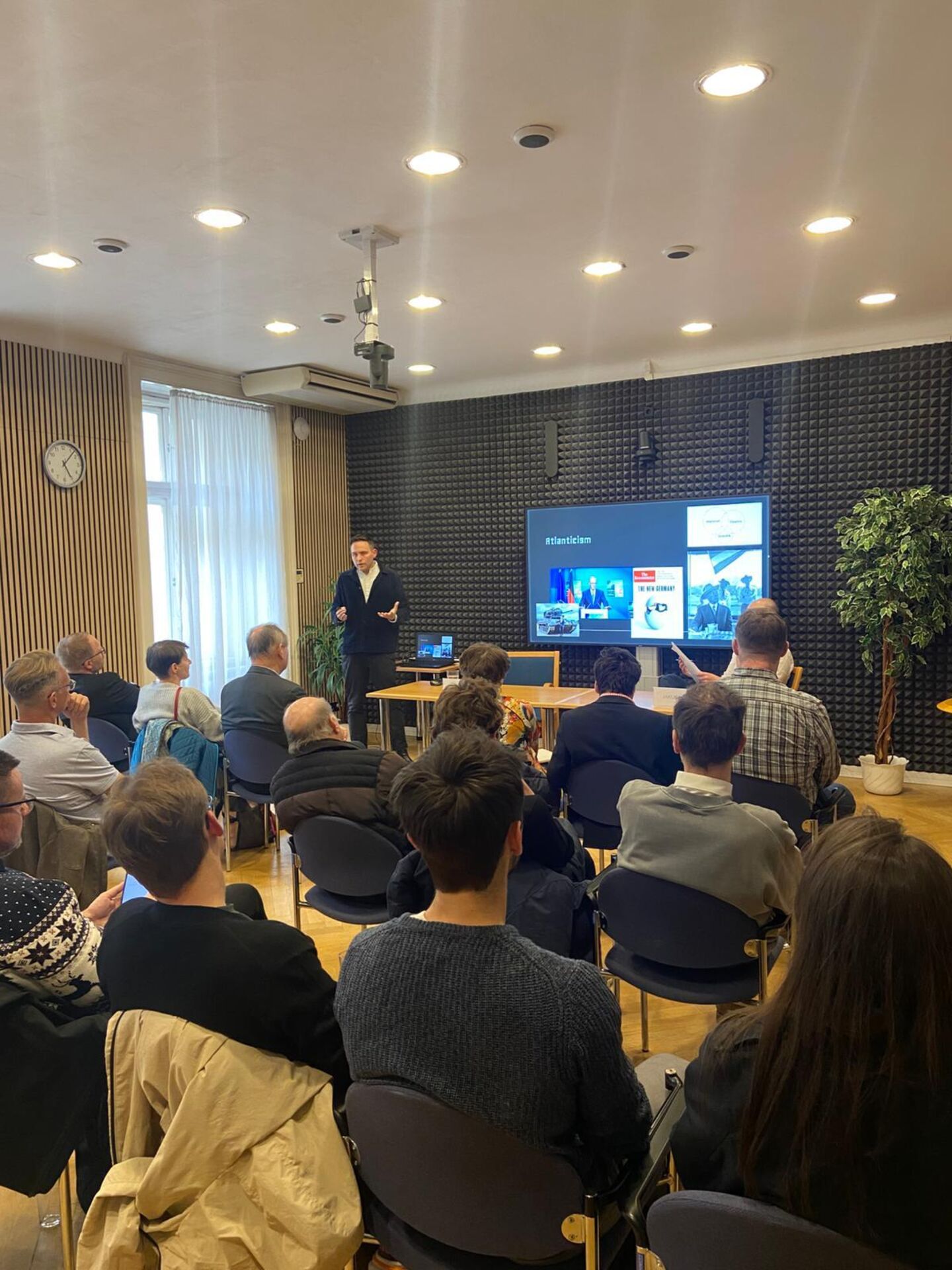
On 13 May, we welcomed Associate Professor Ian Klinke from the University of Oxford for a lecture titled Dead or dormant? Germany after Ostpolitik. The discussion explored how Russia’s invasion of Ukraine in 2022 has transformed debates within German foreign and security policy and whether the foundations of Germany’s long-standing Ostpolitik have now fundamentally changed. The event was moderated by researcher Jakub Eberle.
Professor Klinke examined the tensions between Atlanticism, Ostpolitik and Geopolitik in contemporary Germany and reflected on the country’s evolving role within Europe. The lecture also focused on changing public attitudes towards Russia, debates surrounding military spending and conscription, as well as the growing political significance of AfD and the future direction of German security policy. Participants also discussed broader questions concerning European strategic autonomy, energy security and the future of European integration.
Hungary’s post-Orbán economy
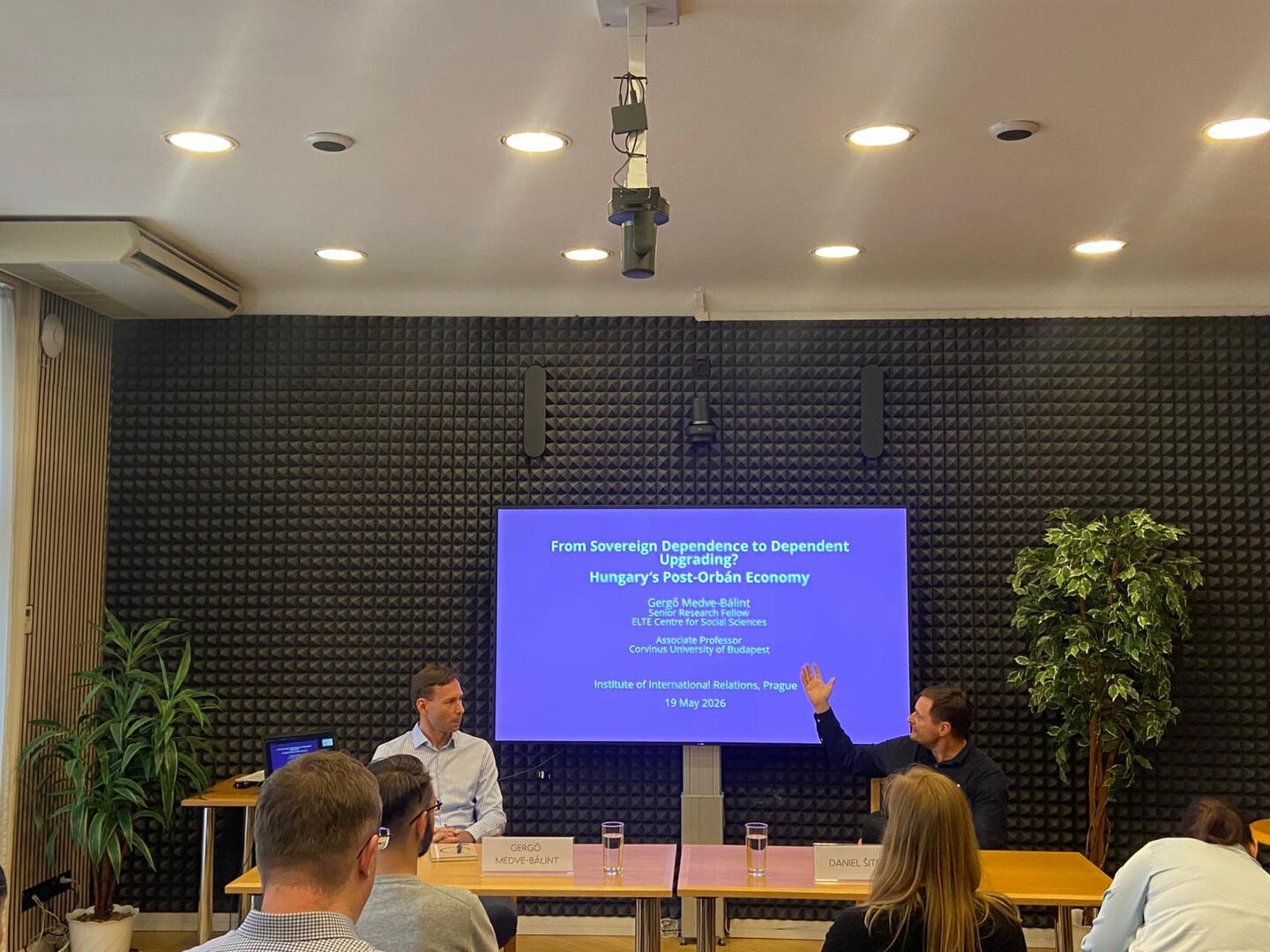
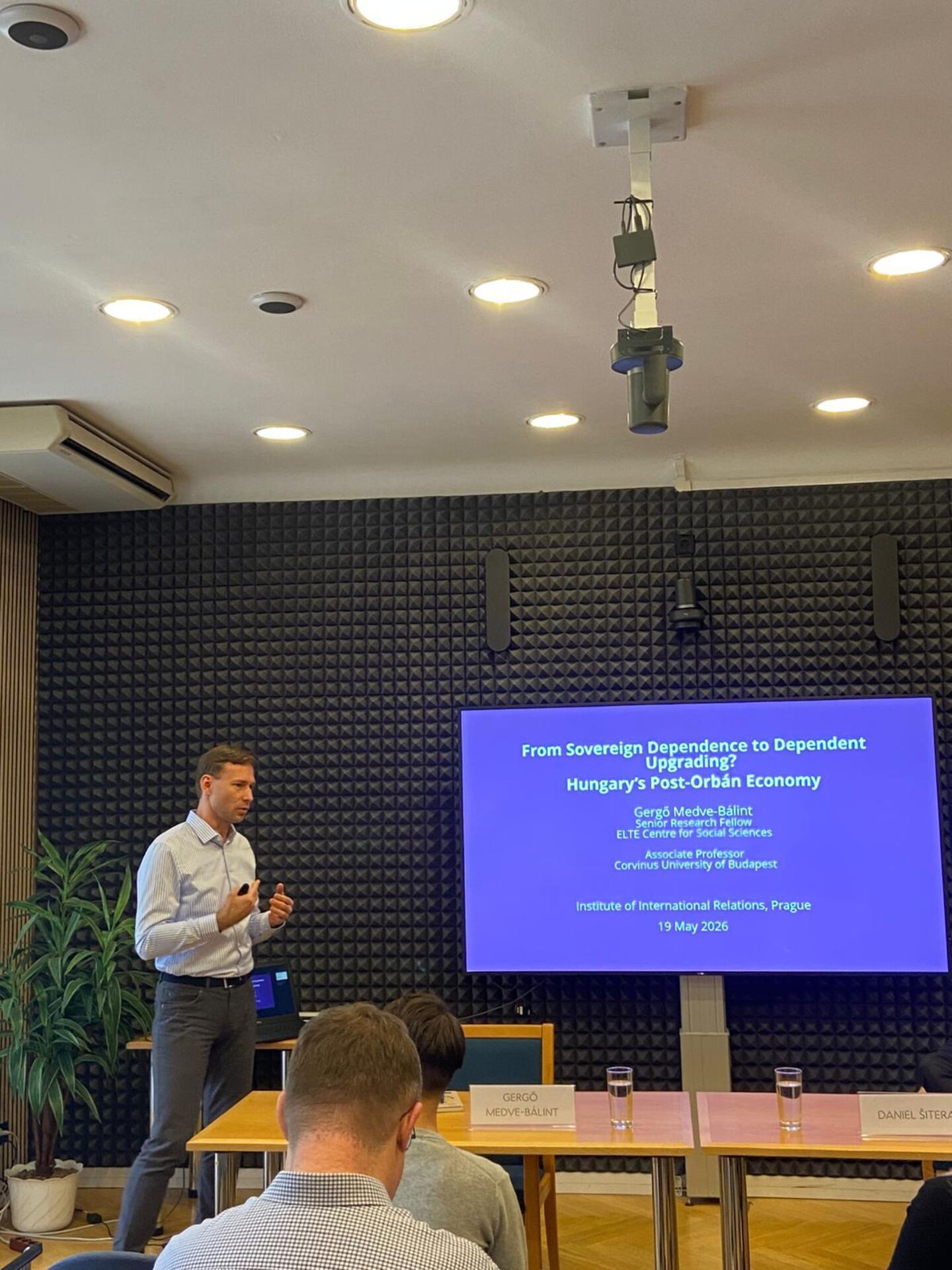
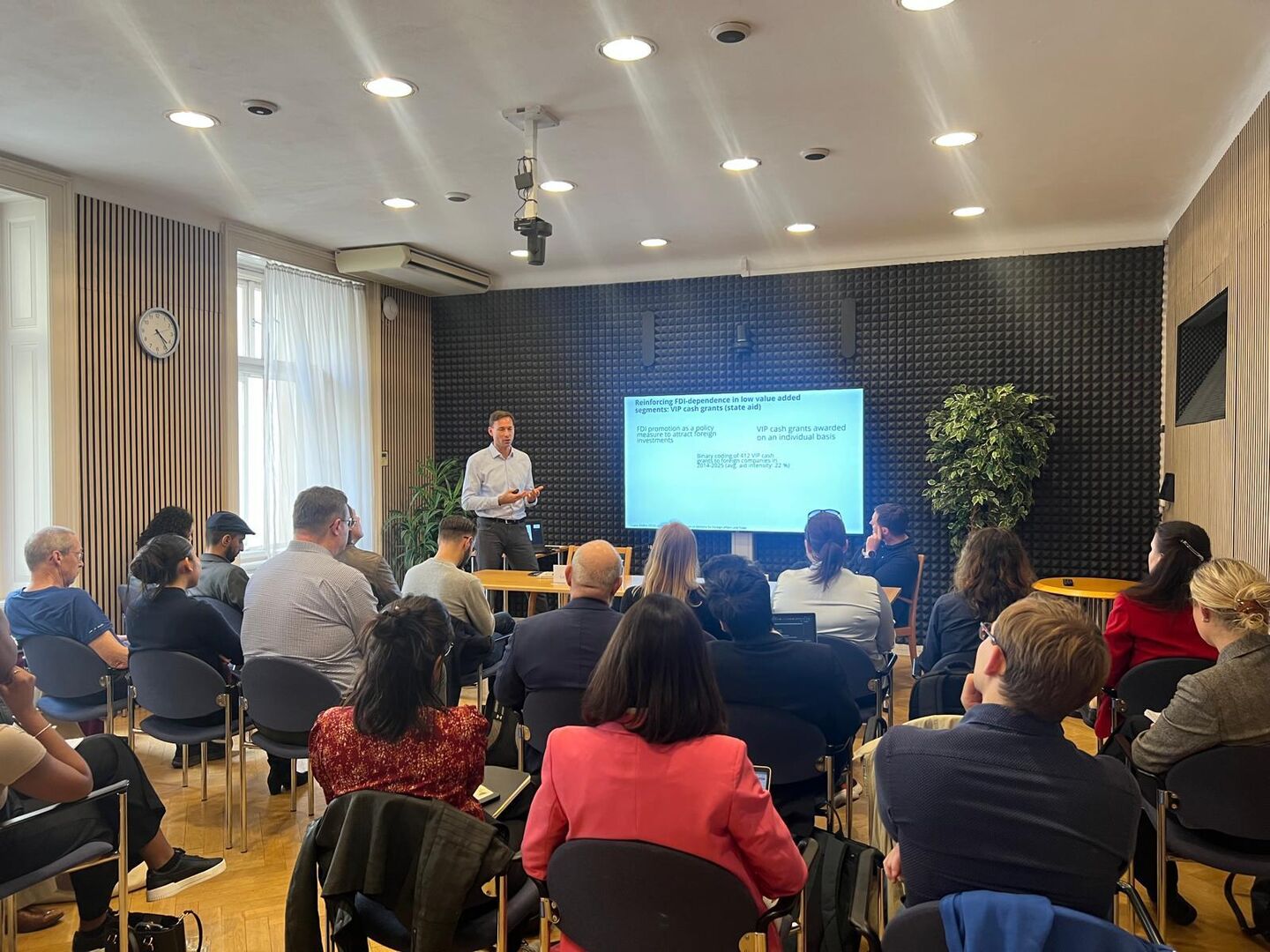
On 19 May, the IIR hosted Associate Professor Gergő Medve-Bálint from Corvinus University of Budapest and the ELTE Centre for Social Sciences. His lecture, Hungary’s post-Orbán economy: From sovereign dependence to dependent upgrading, focused on the economic legacy of Viktor Orbán’s government and the challenges now facing Hungary after the country’s recent political transition. The lecture was moderated by researcher Daniel Šitera.
Associate Professor Medve-Bálint discussed the tensions between economic nationalism and Hungary’s continued dependence on foreign investment, EU markets and external finance. The lecture examined how the suspension of EU funds, slowing foreign investment and regional inequalities contributed to economic stagnation during the final years of the Orbán government. Attention was also given to the economic challenges inherited by the new government of Péter Magyar, including the need for stronger regional development, greater investment in education and healthcare, and the country’s continued dependence on external capital and technology. The discussion also addressed Hungary’s prospects for future economic upgrading, debates surrounding eurozone accession, and the broader position of Central European economies within the European Union.
We would like to sincerely thank the speakers Ian Klinke and Gergő Medve-Bálint for sharing their valuable expertise and insights with our audience. Our thanks also go to moderators Jakub Eberle and Daniel Šitera, as well as to everyone who joined us for these engaging discussions at IIR.




Related articles




paper