Europe as a Task 2026 Brought Debate on Europe’s Security, Competitiveness and Digital Future
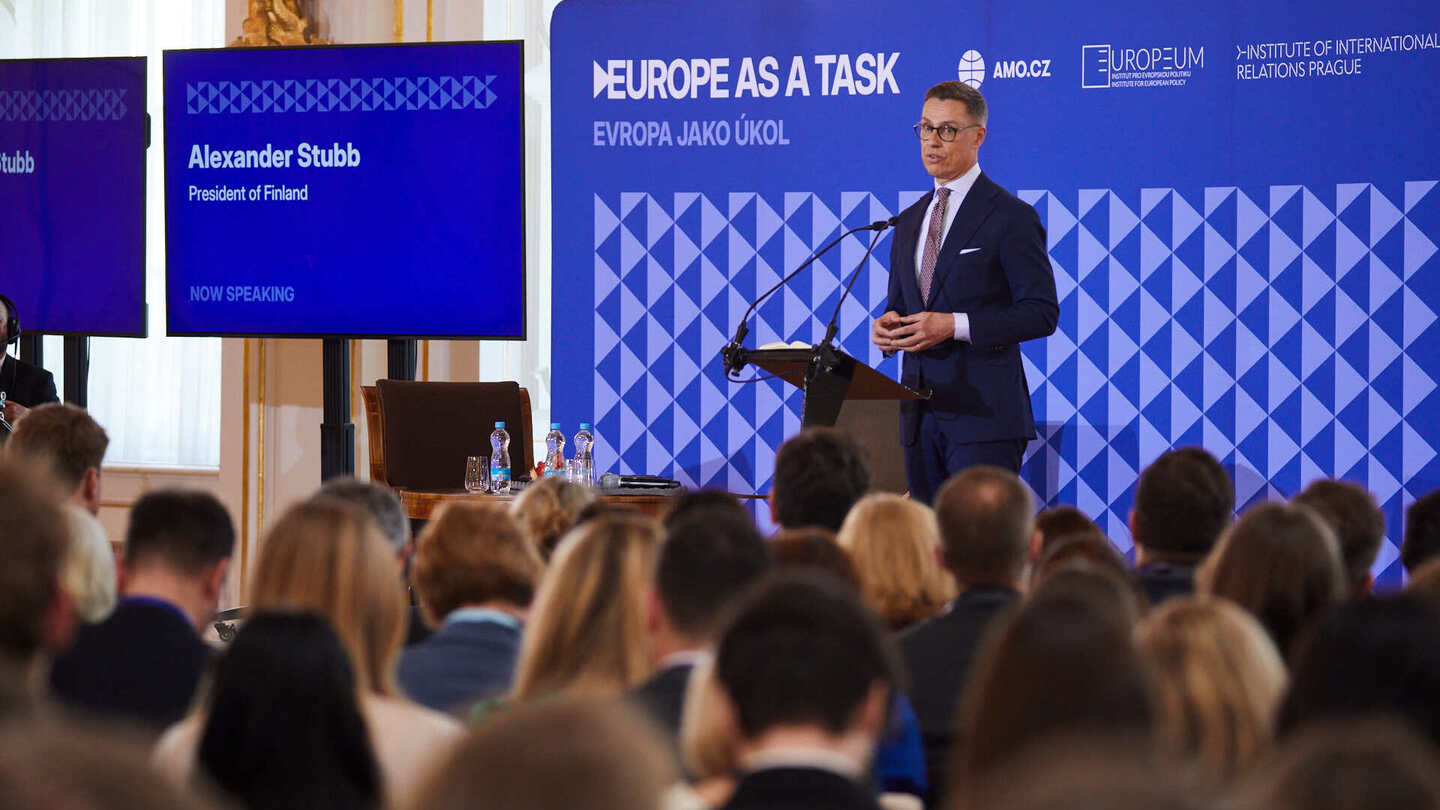
In May, the second edition of the international conference Europe as a Task took place in Prague, focusing on European security, competitiveness, digital sovereignty, economic resilience and the future of the European defence industry. The Institute of International Relations Prague organised the conference together with the Association for International Affairs and the EUROPEUM Institute for European Policy.
Prague Castle Opening with Presidents Pavel and Stubb Brings Debate on Europe’s Security and Strategic Future
The first day of the conference was opened by keynote speeches from Petr Pavel, President of the Czechia, and Alexander Stubb, President of Finland, moderated by Jan Bumba. Both speakers focused on the changing geopolitical order, the future of European security and the need for Europe to take greater responsibility for its own defence, economic resilience and political unity.
President Petr Pavel spoke about the importance of preserving peace, stability and security in Europe, while also stressing that Europe must become stronger economically and politically if it wants to remain an influential global actor. President Alexander Stubb focused on the need for deeper European cooperation, enlargement and strategic confidence in a rapidly changing world order. The opening programme was followed by a high level discussion between Presidents Pavel and Stubb moderated by Rob Cameron from BBC, centred on Europe’s role in global affairs, the future of transatlantic relations and the need for stronger European defence cooperation.
The first expert panel of the conference, European Geopolitical Reset with Economic Security in the Forefront, focused on Europe’s economic security, competitiveness and strategic resilience. The discussion featured David Müller, Director General for European Union and Foreign Trade at the Ministry of Industry and Trade of the Czech Republic, Maria Demertzis from the European University Institute, Violeta Luca, Chief Executive Officer of Vodafone Czech Republic, and Radek Špicar, Vice President of the Confederation of Industry of the Czech Republic. The panel was moderated by Aneta Zachová from Update EU.
Experts and Policymakers Debate Europe’s Competitiveness, Technology and Security on the Second Day
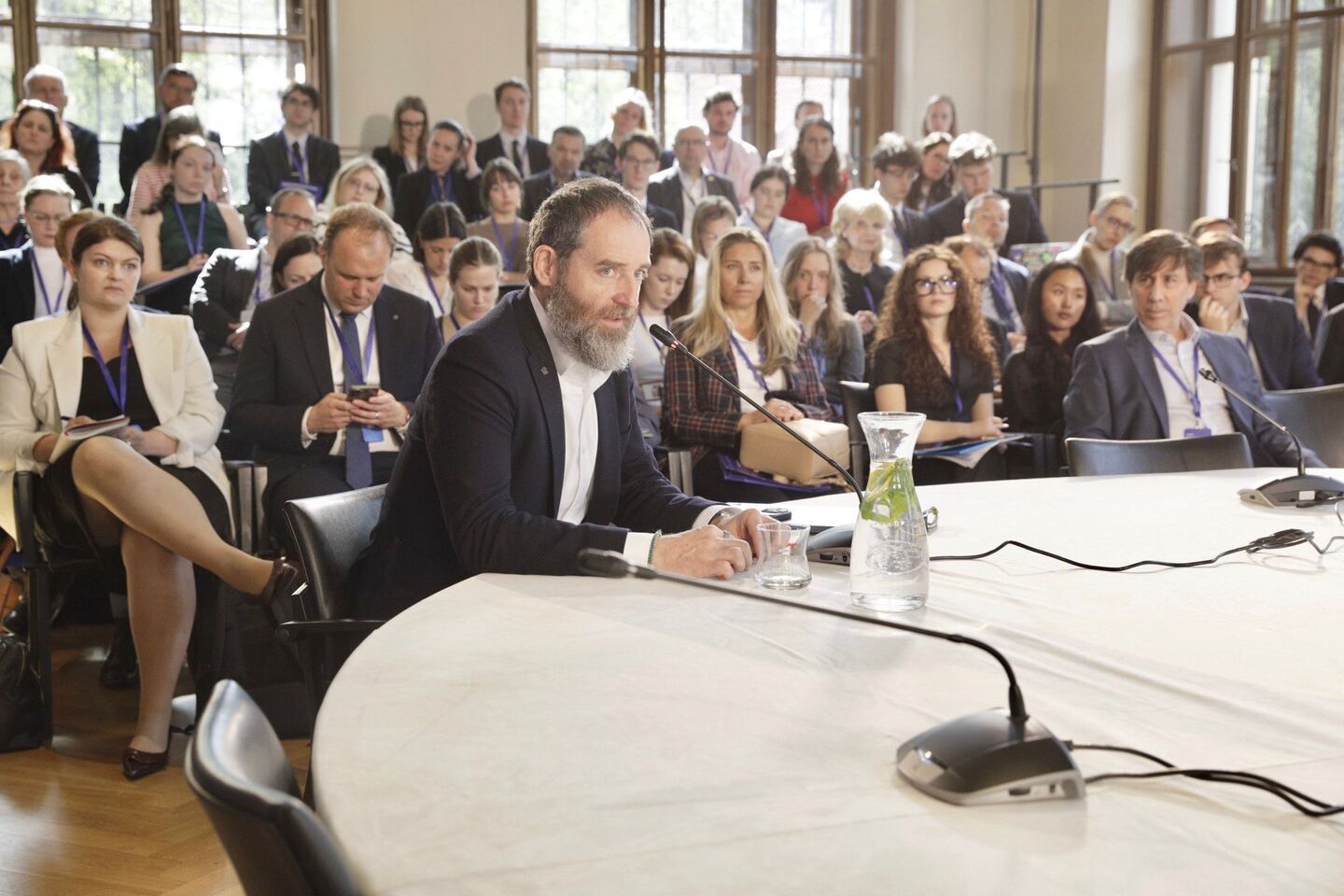
The second day of the conference took place at the Museum of Decorative Arts in Prague and focused primarily on Europe’s competitiveness, digital sovereignty, innovation and defence industrial capacity.
The opening remarks were delivered by Mats Braun, Director of the Institute of International Relations Prague, Viktor Daněk, Executive Deputy Director of EUROPEUM Institute for European Policy, and Vít Dostál, Executive Director of the Association for International Affairs. The opening session also featured Milena Hrdinková, Advisor to the Prime Minister on EU Affairs, who focused on Europe’s long term strategic challenges, including energy security, enlargement, integration and the need for realistic and achievable European policies.
The morning programme continued with a discussion titled Bringing Geoeconomics into the Game featuring Michal Pěchouček, Rector of the Czech Technical University in Prague, moderated by Markéta Boháčová from Deník N and focused on Europe’s ability to compete in the global technological environment, the future of artificial intelligence, the role of universities and research institutions, and the conditions needed for European start ups to remain and grow within Europe. The following part of the programme was the presentation Thin Ice, Thick Tensions: Europe and Polar Power Politics, delivered by Chiara Rinaldi and Izabela Kantor from Politico. The presentation focused on the growing strategic importance of the Arctic.
The first fishbowl discussion of the second day, Building Realistic European Scale Up Strategy for Digital SMEs, focused on Europe’s difficulty in helping innovative companies scale and remain within the European market. The panel featured Heleen Bakker, Director General for European Cooperation at the Ministry for Foreign Affairs of the Netherlands, Alexandr Hobza from the Cabinet of Executive Vice President Stéphane Séjourné at the European Commission, David Müller, Director General for European Union and Foreign Trade at the Ministry of Industry and Trade of the Czech Republic, Christophe de Nijs, Director General for European Affairs at the Ministry for Foreign Affairs of Belgium, and Tomáš Pospíšil, Chief Analyst at the Czech Startup Association. The discussion was moderated by Filip Křenek from the EUROPEUM Institute for European Policy.
The second fishbowl discussion, Digital Sovereignty in a Cold Transatlantic Climate: Dependencies and Choices for Europe, focused on Europe’s technological dependencies, digital resilience and the future of AI and digital regulation and brought together Jean Carberry from the Department of Enterprise, Tourism and Employment of the Government of Ireland, Dita Charanzová from CEPS, Vladimíra Chlandová from Vodafone, Lukáš Kačena, Government Envoy for AI in Czechia, Michael Toutonghi, former Corporate Vice President at Microsoft, and Věra Jourová, former Vice President of the European Commission for Values and Transparency. The discussion was moderated by Asya Metodieva from the Institute of International Relations Prague.
The final fishbowl discussion, Exploring New Instruments for Boosting European Defence Industry, focused on the future of Europe’s defence industrial base and the need to strengthen European defence production and cooperation. The discussion featured Arthur de Liedekerke from Rasmussen Global, Radka Konderlová, Director General for Industrial Cooperation at the Ministry of Defence of the Czech Republic, Andra Migiu from the European Investment Bank, and Milosz Momot from DG DEFIS at the European Commission. The discussion was moderated by Boris Kaliský from the Association for International Affairs.
Throughout the two days, the discussions repeatedly returned to the same central question: how Europe can remain secure, competitive and resilient in a rapidly changing world.
More information about both days of the conference, together with photographs from the event, can be found on the official Europe as a Task conference website.


Related articles


paper