CLOSER Project Brings an ERC Synergy Grant to Czech Humanities Research

The six-year international CLOSER project examines how social divisions shape political parties, party systems and political stability in the Middle East and North Africa. The project brings together the Institute of Sociology of the Czech Academy of Sciences, the Oriental Institute of the Czech Academy of Sciences, the Université libre de Bruxelles and the Institute of International Relations Prague.
The project, CLOSER: Party Systems and Social Cleavages in the Post-Ottoman Space of the MENA Region, received funding in the highly competitive 2025 ERC Synergy Grants call. Of the 712 proposals submitted, 66 projects were selected for funding.
Principal Investigator Clément Steuer secured the grant during his time at the Institute of International Relations Prague. Following his move to the Institute of Sociology of the Czech Academy of Sciences, the IIR continues to participate in CLOSER as a partner institution.
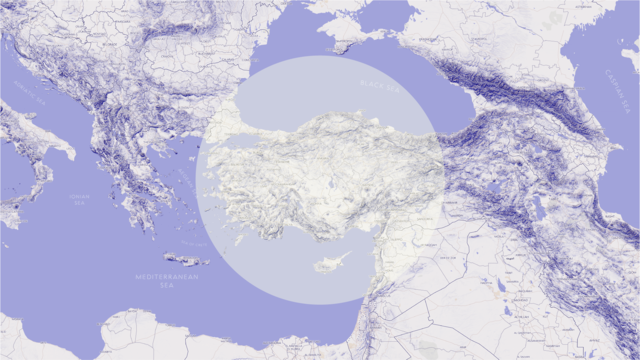
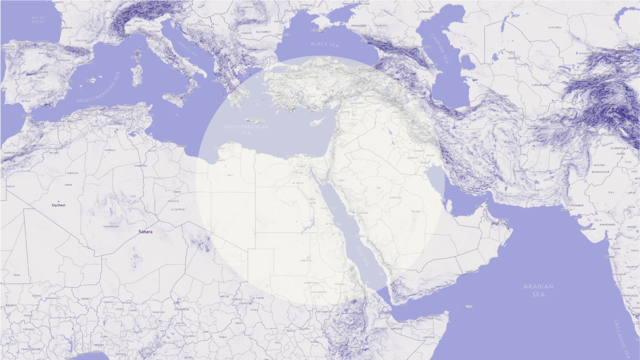
CLOSER will focus on the relationship between social cleavages and the functioning of political parties and party systems in both democratic and authoritarian contexts. The research combines political science, history and geography and, through six case studies, covers Tunisia, Egypt, Israel, Palestine, Jordan, Lebanon, Türkiye and Kuwait. Its aim is to broaden the theory of social cleavages, which has so far been based largely on the experience of Western European societies, by incorporating insights from the post-Ottoman space.
“The CLOSER project aims to show that politics in the Middle East and North Africa is not the result of cultural exceptionalism, but rather the product of historically shaped socio-economic divisions that are deeply rooted in these societies,” said Clément Steuer, the project’s coordinating Principal Investigator.
The significance of the project also extends beyond academic debate. Many of the countries under examination form part of the European Union’s Southern Neighbourhood, and their political development is closely connected to Europe. The project’s findings are intended to contribute to a better understanding of how political systems manage social conflict and which conditions contribute to stability or, conversely, to crises.
The project will also promote dialogue between research and policymaking and translate its findings into concrete recommendations. In this way, CLOSER will strengthen the principle of evidence-based policy as one dimension of science diplomacy, based on the use of scientific knowledge in political decision-making.
The core team of Principal Investigators consists of Clément Steuer of the Institute of Sociology of the Czech Academy of Sciences, Jan Zouplna of the Oriental Institute of the Czech Academy of Sciences, and Gilles Van Hamme of the Université libre de Bruxelles. Interdisciplinary teams of researchers from several countries will take part in the six-year project.
Related articles


paper