Democracy Promotion and Development Policies towards the Southern Neighbourhood

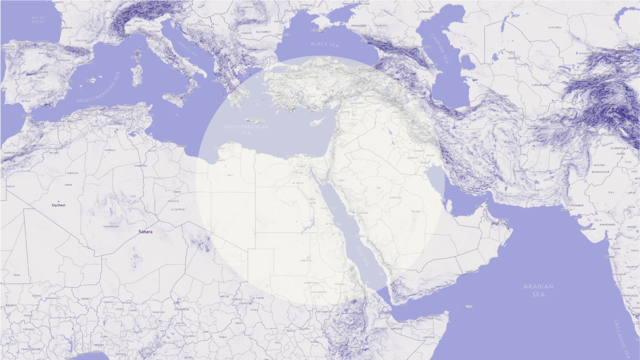
Clara Carrera and Clément Steuer focus on the MENA region: ongoing conflicts (Libya, Israel/Palestine), raising tensions (Algeria/Morocco), authoritarian restorations (Egypt, Tunisia) and outburst of sectarian violence (Syria) illustrate the declining ability of the European Union (EU) to secure its Southern flank. The risk is a further destabilisation of the Southern Neighbourhood, and the opportunity is for European countries torethink their development policy in the region in a more holistic way. Czechia can also use this opportunity to modernise its development policy toolkit in terms of favouring a bottom-up approach, as well as a multilateral cooperation with the recipient countries of its development aid.
INTRODUCTION
As the world is transitioning from a unipolar to a multipolar system, the interregnum is bringing instability in the Middle East and North Africa (MENA). Fifteen years after the Arab Spring, the region seems more unstable than ever: its ongoing conflicts (Libya, Israel/Palestine), rising tensions (Algeria/Morocco), authoritarian restorations (Egypt, Tunisia) and outburst of sectarian violence (Syria) illustrate the declining ability of the European Union (EU) to secure its Southern flank. At the same time, the world system’s transition is also providing the MENA countries with more agency and opportunities through a redrawing of regional and international alliances. The Abraham Accords (2020), the Green Partnership between the EU and Morocco (2022), and the re-establishment of diplomatic relations between Syria and the West (2025) have shown that the current reshuffling of the cards can bring new opportunities for trade and economic growth in the region.
STRENGTHENING THE MEDITERRANEAN INTEGRATION TO ENSURE STABILITY
Democratic transitions and sustainable reforms can only succeed when embedded within a supportive international framework. For many Central and Eastern European post-communist countries, the EU has served as just such a crucial anchor, as it has provided support for institutional and policy reforms and facilitated economic restructuring. The strength of the EU support varied according to each country’s specific prospects for EU accession. In contrast, such a stabilising reference point has been largely absent in the case of the MENA countries (Gligorov, Havlik, Richter, Sandor, & Hermine, 2012). Consequently, a newly redefined form of international engagement, and particularly a more proactive and consolidated role for the EU, will be essential in shaping the success of future reforms in the region.
One tool at the disposal of the EU is development policies. Taken together, the EU and its member states are the world’s largest donor of official development assistance (Council of the EU, 2024). Development is a shared competence of the EU, and the cooperation between the EU and the member states is well enforced in this domain (European Parliament, 2025). Nevertheless, the promoting of sustainable development reforms in regions affected by deep instability, such as the MENA countries, is far from straightforward.
This is why the first objective on which the EU could focus its efforts in order to foster MENA stability is that of regional integration (Bendebka, 2025). The EU has so far lacked a coherent and consistent strategy for supporting genuine regional integration within the MENA region. Although initiatives such as the “European Neighbourhood Policy” and the “Union for the Mediterranean” have sought to strengthen cooperation, their impact has been limited, as issues of security, migration, and border control have often been prioritised over sustainable development and economic partnerships among neighbouring countries. Nevertheless, the EU holds the potential to act as a key catalyst in promoting a more inclusive and balanced form of regionalism in the MENA area. To do so, it must move beyond a top-down, conditionality-based approach and instead support bottom-up initiatives that empower local actors, strengthen civil society, and encourage democratic governance. Green Partnerships could be an important tool here (Grosskreutz, & Hanelt, 2023). Such an approach would enable the EU to play a more constructive role as a structural stabiliser and a genuine partner in advancing the new regionalism of the MENA region, which could help the area to achieve a greater stabilisation.
Another aspect that could be a priority for the EU in its relations with the MENA region – as emphasised by the consequences of the Russian aggression on Ukraine (Steuer, & Rieker, 2023) – is food security. Global food security has been a commitment of the EU’s development policy since the adoption of the policy coherence for development in 2005 (European Commission, 2005). A better integration of European and North African agriculture policies could reinforce food security on both sides of the Mediterranean Sea, reduce the influence of Russia in the region (Petříček, & Ditrych, 2025), and help to mitigate the effects of climate change (Aslany, 2025).
The EU already possesses significant influence in the MENA region through its extensive economic and institutional ties, yet it does not fully employ this leverage in support of human rights (Lynch, 2021). To achieve this, the Union needs to overcome its internal divisions and articulate common, unified positions. The EU is often perceived by MENA governments as fragmented and inclined to follow the United States’ lead rather than as acting as an independent global actor. To address this perception and enhance its effectiveness, the EU could adopt several strategies, such as combining public and private diplomacy, engaging more closely with civil society, and collaborating with NGOs and human rights defenders to identify shared priorities and strengthen the local credibility of European action in the region.
CHALLENGES FOR CZECHIA
Czechia achieved democracy relatively late compared to the Western countries. However, its rapid development following the democratic transition and its sustained economic growth, have led the country to gain increasing relevance and influence within European institutions. Czech foreign policy is largely aligned with the core principles of the EU. In May 2025 a new foreign policy framework that emphasises the importance of national security, membership in the EU and NATO, and support for Ukraine, has been approved by Fiala’s government. The strategy aims to strengthen existing alliances and foster new partnerships, while presenting Czechia as a modern, democratic, and reliable country.
The country also contributes actively to development cooperation programmes, focusing particularly on the promotion of democracy and human rights, and implementing bilateral cooperation projects in which the Czech Development Agency (CzechAid) plays a key role, as well as trilateral and multilateral initiatives. Its main objectives, in line with those of the EU, are to provide universal support to civil society and the defence of human rights, to guarantee independent media and free access to information, and to strengthen the rule of law as well as democratic good governance. Czechia implements specific programmes in the MENA region, not only a general development cooperation, but also initiatives focused on stabilisation, reconstruction, and humanitarian assistance in Syria, Iraq, Lebanon, Palestine (Gaza), Jordan, and Yemen.
Czechia could benefit from a strengthened role for the EU as a global actor and also from the renewal of development policies. This would allow Czechia to further emerge as a key player, establish more solid partnerships and promote a cooperation based in creasingly on equal relations with the MENA countries, not only with the countries in need of assistance, but also with economic partners such as Morocco, Tunisia, Jordan or Turkey. This would enable it to pursue policies of stabilisation and the promotion of human rights and democracy in a region affected by severe instability, while focusing more closely on the needs of local civil societies. A possible starting point could be to promote – in the context of cooperation with and aid distribution to the MENA region – a bottom-up approach based on multilateral partnerships involving local stakeholders from both government and civil society who are better equipped to assess and address the needs of the civilian populations that the aid is meant to support.
Furthermore, it is essential that domestic political tensions do not divert attention away from the need to strengthen foreign policy in order to contribute to making Europe a genuine global actor in an increasingly unstable international context dominated by major powers that tend to prioritise their own interests over those of the countries in which they intervene, thereby undermining the potential of international cooperation.
A NEW APPROACH TO COUNTERING GLOBAL AUTHORITARIANISM IN THE EU’S SOUTHERN FLANK
The stability of the Southern neighbourhood is a crucial factor affecting the future of Europe. With the multi-polarisation of the world and the rise of a global authoritarianism, the EU should take back the initiative in the MENA region by developing a comprehensive strategy to reduce social and territorial inequalities, encourage an economic and agricultural regional integration, ensure food security on both sides of the Mediterranean Sea and eventually promote human rights and democracy there. The increasing competition of authoritarian actors looking to promote their own models should encourage the European countries to break with the paternalist and neocolonial attitudes of the past, and encourage a bottom-up sustainable development approach involving civil society from both sides of the Mediterranean. As the Gulf
Council of Cooperation shares some of the European concerns at least in terms of stability, environmental transition and food security, it could be one of the partners of the EU in developing such a comprehensive policy.
The ongoing transformation of the global order offers the EU a window of opportunity to redefine its relations with the MENA region, not just as a matter of security management, but as a common project of sustainable and inclusive development.
→ The development of new cooperation policies could enable the European Union to assert itself as a global and autonomous actor in the eyes of its partners in the Southern Neighbourhood.
→ The Euro-Mediterranean cooperation should be based on a bottom-up approach that would put local civil society at the centre. Member states such as Czechia could lead this transformation of the North-South relationship.
→ The EU and its member states should not abandon their effort to promote democracy. To be successful in an increasingly multipolar world, however, this effort needs to adapt and clearly break with the paternalist attitudes of the past.
→ Due to its traditional role as a voice supporting human rights and democracy, Czechia has a crucial role to play in this redefinition of the EU development policy towards its Southern Neighbourhood.
Související články