New Study Explores Societal Resilience in NATO and Ukraine

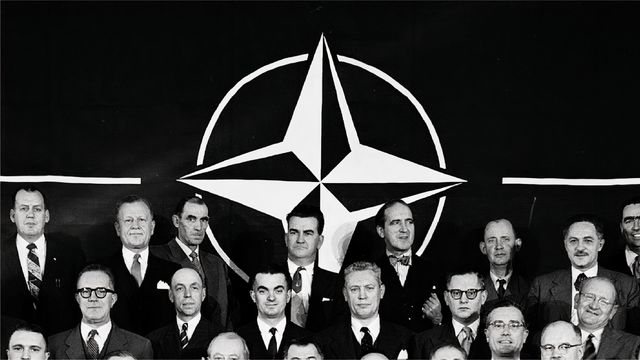
Our researchers Jan Daniel and Míla O’Sullivan have published a new open-access study in the Global Policy journal, showing how societal resilience has become an increasingly important part of NATO’s deterrence and defence thinking, and examining the weaknesses of its whole-of-society approach and lessons that can be drawn from Ukraine.
Since Russia’s invasion of Ukraine in 2014, societal resilience has become an increasingly important part of European security policy and NATO’s approach to deterrence, particularly against hybrid threats, cyberattacks and disinformation. Daniel and O’Sullivan show that although NATO increasingly promotes a “whole-of-society” approach, resilience is still often framed in state-centred and militarised terms. By contrasting conventional, societal and feminist approaches to resilience, they argue that preparedness should extend beyond defence institutions and critical infrastructure to include the social foundations that make societies resilient, such as trust, cohesion, inclusion, public services and strong civic networks.
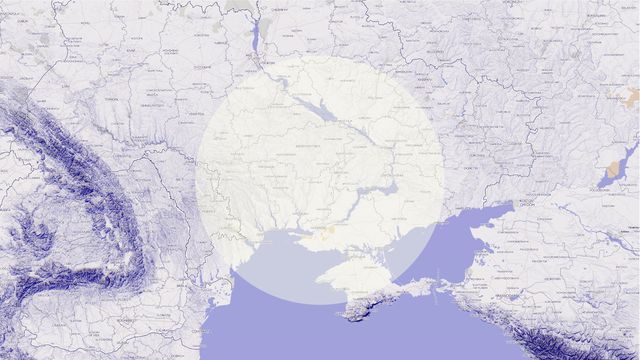
Ukraine’s resistance illustrates why this broader perspective matters: alongside military capabilities, civil society, municipalities, businesses, volunteers and local communities have played a crucial role, while different groups face different vulnerabilities. The feminist perspective allows us to see that. At the same time, the authors caution against overly celebratory narratives of Ukrainian resilience, which can obscure exhaustion, inequality and the wider social and economic costs of prolonged war. With military spending reaching historic levels in many countries across Europe, the study also highlights the need to consider trade-offs between defence and social investment, warning that neglecting healthcare, education, social infrastructure and civil society may ultimately weaken societal resilience itself.
Read the full open-access study by Jan Daniel and Míla O’Sullivan, published in Global Policy as part of the special issue Non-Nuclear Deterrence in Europe.
Related articles


paper

paper