The Enforcement of the EU Forced Labour Regulation and Systemic Forced Labour Risks in Xinjiang

paper
How will the EU’s new Forced Labour Regulation cope with the widespread and hard-to-verify forced labour practices linked to China’s Xinjiang region? This topic is explored by our research Jan Švec in a policy paper produced within the Think Visegrad in Brussels Fellowship programme.
In this paper, Jan Švec from the Institute of International Relations Prague, examines the practical and political obstacles the EU will face when implementing its forthcoming regulation banning products linked to forced labour. Drawing on extensive desk research and interviews with policymakers, experts, and representatives of EU institutions, the author offers a detailed look at why Xinjiang represents a uniquely complex test case for the EU’s ambitions.
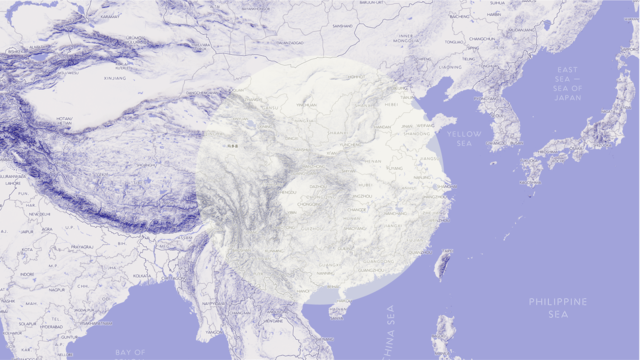
The paper argues that the EU's new forced labour regulation will face serious challenges when applied to the Chinese region of Xinjiang, where coercive labour is systemic yet difficult to prove in individual cases. The paper recommends treating Xinjiang as a high-risk region as a whole, using systemic evidence rather than case-by-case investigations. Interviews also indicate that enforcement may be influenced by political and economic interests, as Xinjiang is deeply integrated in global supply chains for solar energy, critical raw materials, PVC, aluminium and cotton. The Commission should consult in advance with member states and relevant stakeholders on the potential risks of imposing a ban and, in that framework, prepare alternative solutions. The Commission should also push companies to map their supply chains in advance so they know exactly where their inputs originate once the regulation applies.
As the EU positions itself as a global leader in value-based trade governance, the question is no longer whether forced labour should be addressed—but how far the EU is prepared to go when the political and economic costs are high. Xinjiang is the clearest test of that commitment.
Will the EU ultimately rely on systemic evidence to take decisive action, or will strategic dependencies dilute the regulation’s impact? Read the full paper.
Související články